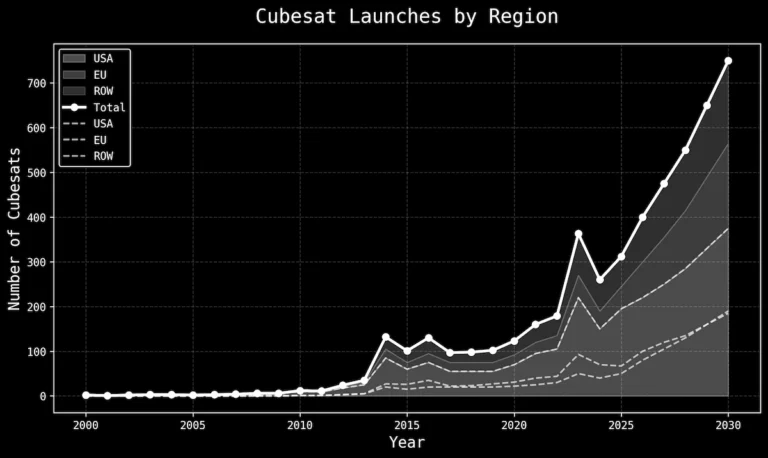
If you’re sending hardware into space, you have to test it in space first.
That sentence should be obvious. In practice, it still isn’t — especially for smaller teams navigating their first qualification campaign.
The problem isn’t awareness. Most engineers building CubeSats or satellite payloads understand that orbital conditions are brutal. They know about vacuum. They know about thermal cycling. What they often lack is direct access to the infrastructure that can actually replicate those conditions — and the process framework to use it effectively.
That’s the gap TVAC addresses. And it’s the gap Bavarian Space Lab is closing.
What Actually Happens to Hardware in Orbit
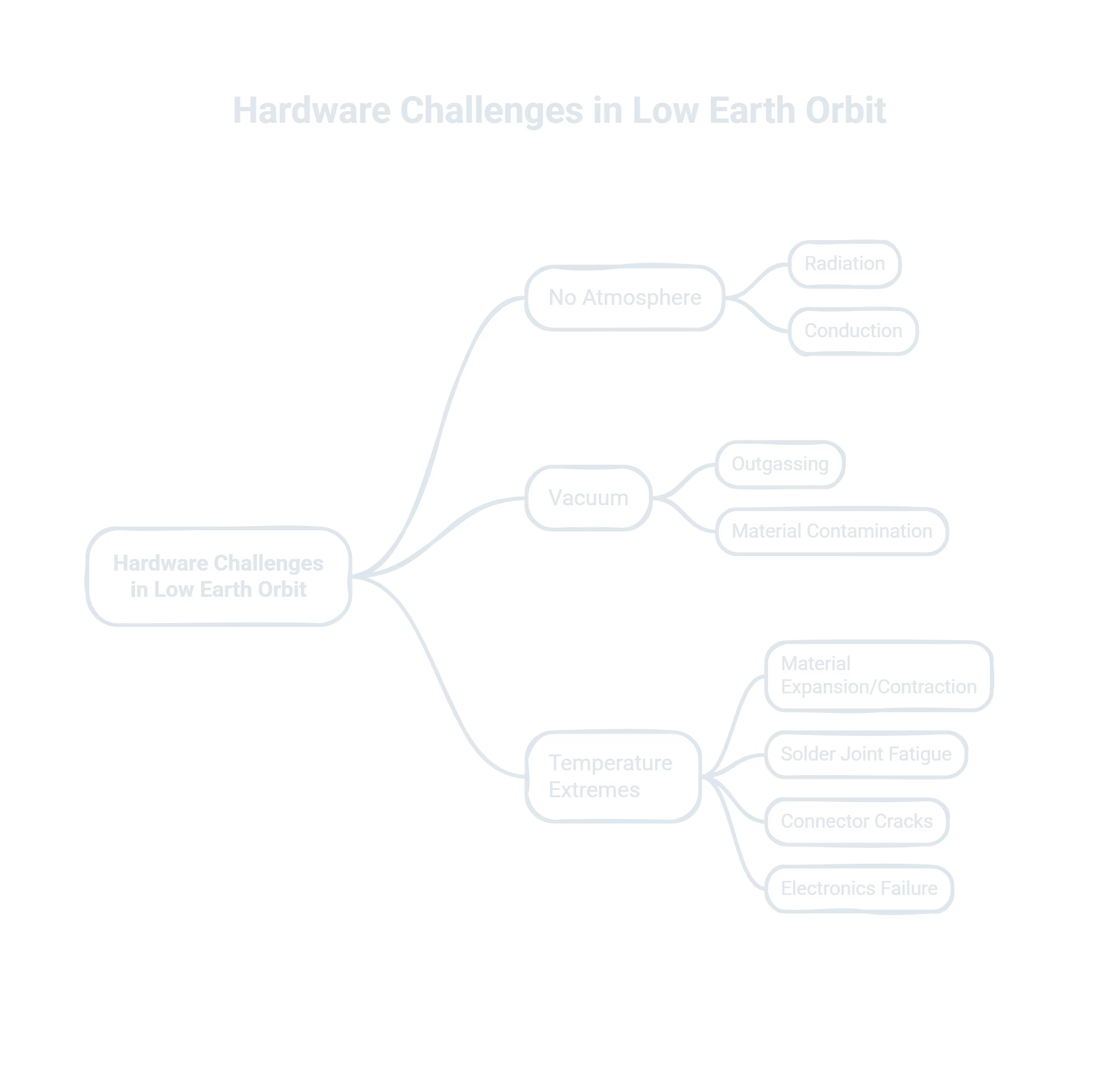
The conditions hardware encounters in low Earth orbit are not an extension of anything on the ground. They are categorically different.
In orbit, there is no atmosphere. That means no convective cooling — heat has to be managed entirely through radiation and conduction. It also means vacuum levels in the range of 10⁻⁵ to 10⁻⁶ mbar, which causes materials to outgas: trapped solvents, adhesives, lubricants, and polymer compounds release into the surrounding environment. In a satellite, that outgassing can deposit on optical surfaces, contaminate sensors, or alter the mechanical properties of adjacent components.
Temperature is equally unforgiving. Depending on orbit altitude and sun exposure, hardware regularly cycles between -100°C and +125°C. A single orbital pass can move a component through that entire range within 90 minutes. Materials expand and contract at different rates. Solder joints fatigue. Connectors develop micro-cracks. Electronics that performed perfectly in ambient lab conditions begin to fail — not because they were poorly designed, but because they were never tested under conditions that reflected how they would actually be used.
A standard climate chamber does not reproduce this. It can cycle temperatures, but it cannot remove the atmosphere. Without vacuum, you cannot replicate outgassing behavior, correct thermal transfer conditions, or the mechanical stress that comes from materials responding to combined vacuum-thermal loads. The two variables are inseparable in orbit — and they need to be inseparable in testing.
That is precisely what a Thermal Vacuum Chamber (TVAC) provides.
Who Needs TVAC Testing — and When
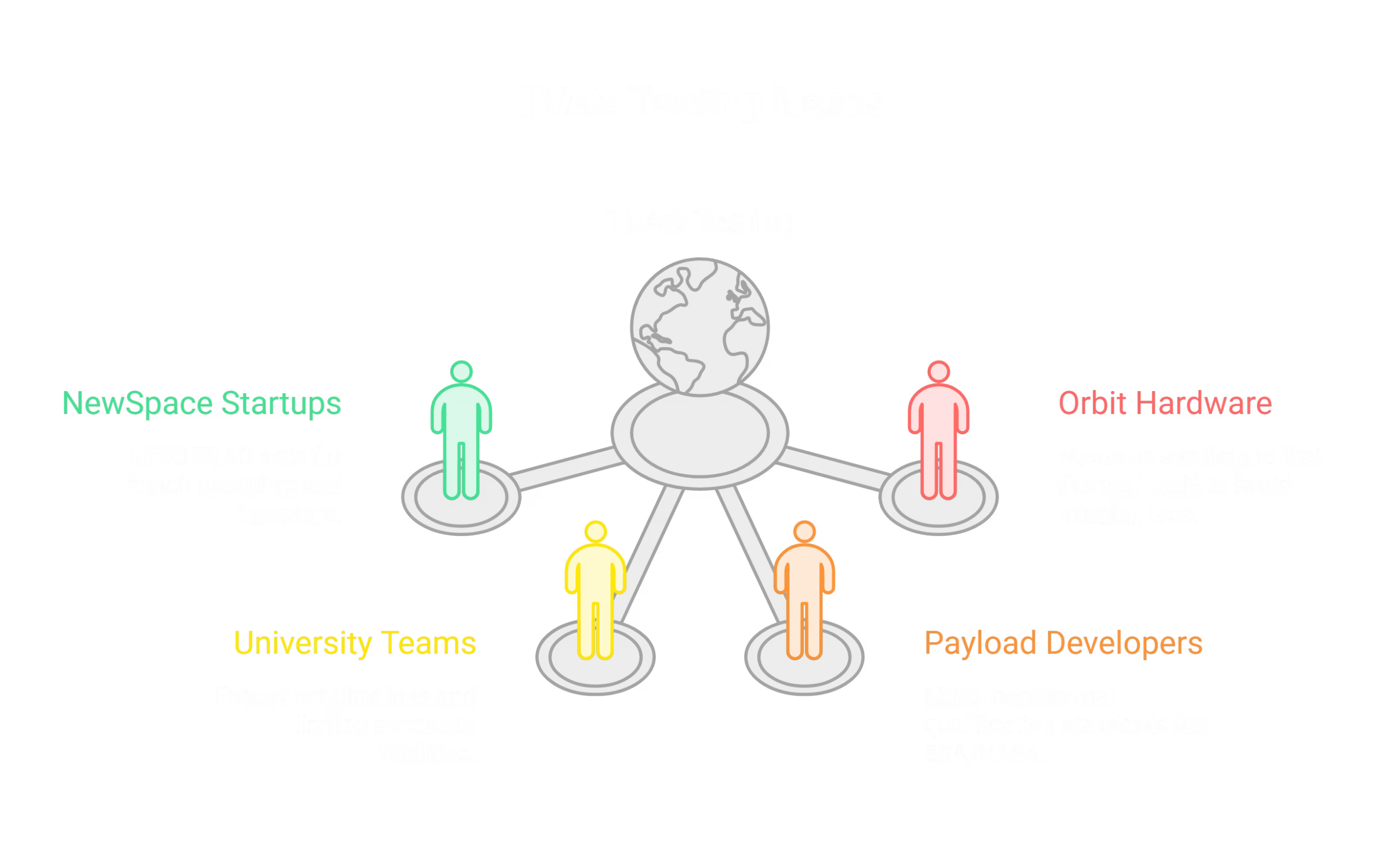
TVAC testing is not exclusive to large space agencies or prime contractors. The NewSpace era has brought orbital hardware within reach of university research groups, deep-tech startups, and mid-size payload developers. The testing requirements have not shrunk accordingly.
NewSpace startups launching their first satellite need TVAC data to satisfy launch provider requirements and demonstrate due diligence to investors and mission operators. First-flight hardware with no flight heritage carries inherent risk — documented thermal vacuum qualification is one of the primary ways to reduce it.
University teams qualifying CubeSats face a specific challenge: the timeline from design freeze to launch window is often short, and access to qualified TVAC facilities through traditional channels is slow, expensive, and not designed for 1U or 3U form factors. A facility oriented toward small satellite hardware changes that equation.
Payload developers working to ESA or NASA requirements must meet formal qualification standards — ECSS for ESA missions, MIL-STD-1540 or similar for NASA-adjacent programs. These standards specify test profiles, dwell times, and documentation formats. A test lab that understands those requirements and has the process infrastructure to support them is not interchangeable with a general-purpose test house.
Anyone sending hardware into orbit who needs to know it will survive the first thermal cycle. On-orbit repair is not a realistic option for most missions. A thermal vacuum failure after launch is a mission loss. A thermal vacuum failure during testing is a problem you can actually fix.
TVAC is not a nice-to-have in the qualification chain. It is the last controlled environment in which a real failure can be caught, diagnosed, and corrected before it becomes permanent.
Testing as a Process, Not a One-Time Event
One of the structural problems with how thermal vacuum testing has historically been accessed is that it was treated as a single milestone — a box to check before a specific review gate. A team designs hardware, sends it to a test facility, receives a pass/fail result, and moves on.
That model made sense when test campaigns were enormous, hardware was largely bespoke, and launch schedules were measured in years. It does not make sense for a CubeSat team with a six-month window between PDR and launch.
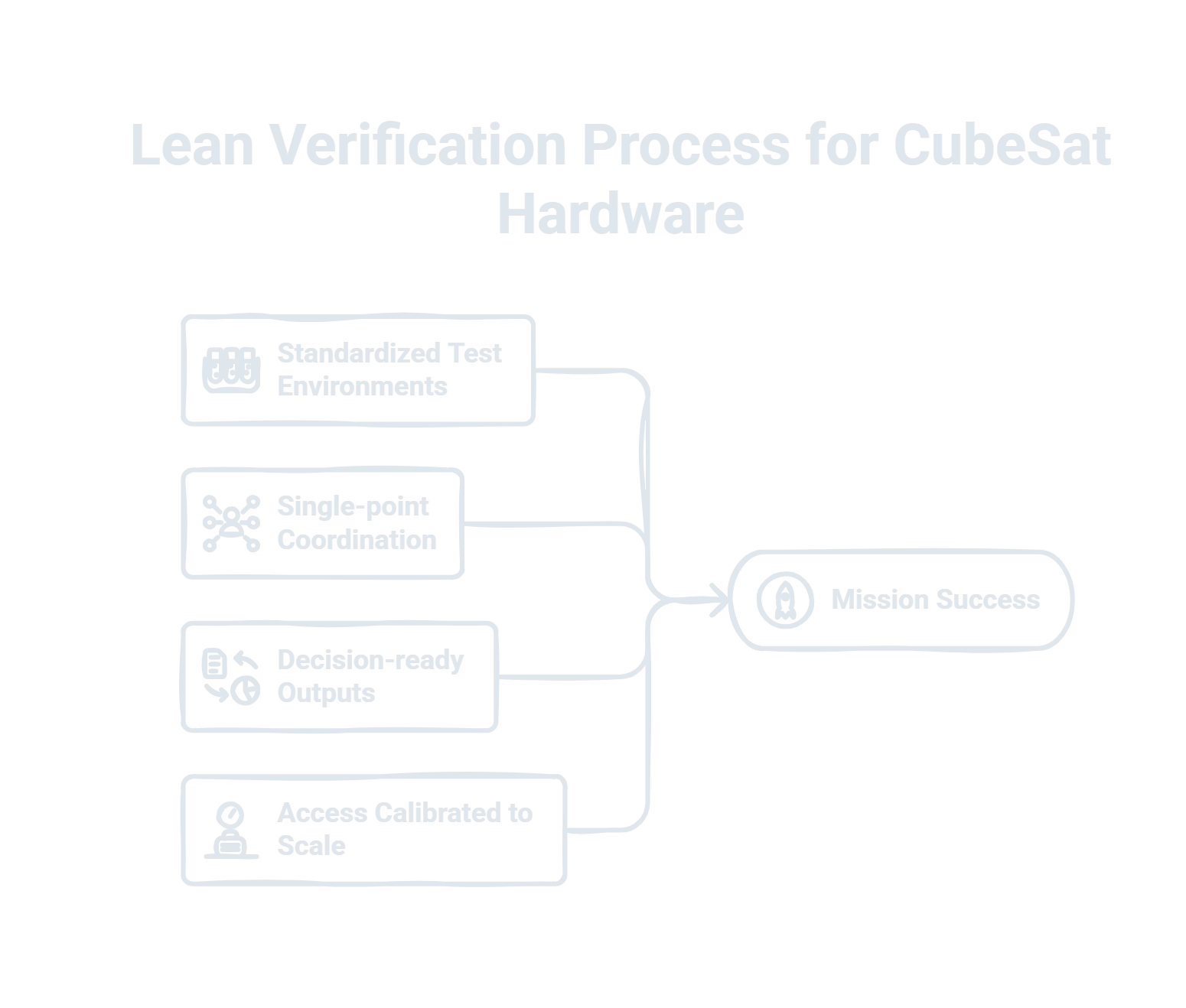
What lean verification actually looks like is different:
- Standardized test environments that are configured and documented for repeatable use — not set up fresh for each customer
- Single-point coordination across test planning, execution, and documentation, so teams are not managing logistics across multiple facilities and vendors
- Decision-ready outputs — test reports structured to support the next qualification milestone, not just raw data
- Access calibrated to hardware scale — test volume and profile matched to 1U–12U CubeSats and small satellite payloads, not scaled down from infrastructure designed for 500 kg spacecraft
This is the operating model Bavarian Space Lab is building around its TVAC capability. The infrastructure serves the process. The process serves the mission.
TVAC at Bavarian Space Lab — What This Means for Munich and European NewSpace
Bavarian Space Lab is establishing TVAC capability in Munich, making thermal vacuum testing accessible to teams in the DACH region and across European NewSpace without the lead times and logistical overhead of traveling to legacy facilities.
For a startup in Munich, Berlin, or Vienna, proximity matters — not just in cost, but in iteration speed. Early-stage hardware development involves multiple test-analyze-fix cycles. Every additional week in a testing queue is a week closer to a launch window. Every trip to a facility outside the region adds scheduling friction, shipping risk for flight hardware, and overhead that scales poorly for small teams.
Germany and the broader European NewSpace ecosystem have seen significant growth in satellite development activity over the past several years. That growth has not been matched by a corresponding expansion of test infrastructure accessible to small missions. The gap between what teams need to qualify hardware and what they can realistically access is one of the limiting factors on European launch cadence.
Bavarian Space Lab’s TVAC facility is positioned to close part of that gap — for CubeSat teams, for university research programs, and for payload developers working to ESA qualification requirements from a European base.
The qualification infrastructure you need should be where you are. Not reserved for programs with the budget and timeline to go wherever the facility happens to be.
Test Faster. Launch on Time.
Space qualification has always required TVAC. What’s changing is who can access it, and how efficiently the process can run for small hardware and small teams.
Bavarian Space Lab is opening early-access slots for thermal vacuum testing. If your team is planning the next step toward hardware qualification — whether that’s a first satellite, a CubeSat qualification campaign, or a payload working toward ESA compliance — reach out now to coordinate your test slot.
The hardware won’t fix itself after launch.
Test it where you still can.