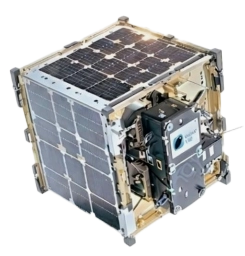
Qualification and acceptance testing for small satellite hardware up to 16U. Accredited to ISO/IEC 17025, aligned with ECSS-E-ST-10-03C. Vibration, shock, thermal-vacuum and functional verification
From vibration to vacuum, we run the tests that stand between your hardware and mission failure. Built exclusively for small space hardware, based in Munich.
Thermal & Vacuum Testing
Expose your hardware to the thermal and vacuum conditions it will face in orbit. Thermal cycling, TVAC, and thermal balance — verified across your full operating range.
Validate structural integrity under launch loads. Sinusoidal sweep, random vibration, and shock tests to qualification and acceptance levels — across all three axes.
Verify that your hardware neither generates nor is susceptible to electromagnetic interference. Radiated and conducted emissions, immunity across relevant bands.
Hardware that survives a test still needs to work afterward. Subsystem-level functional verification under controlled conditions — checking behaviour, not just structural integrity.
Test criteria per customer specification or applicable subsystem standard
Full qualification or acceptance test campaigns combining multiple test types in a coordinated sequence. We handle scheduling, documentation, and reporting — you get a single test report covering everything.
ECSS qualification & acceptance levels — per mission class
Running today on enveon’s existing test infrastructure — with dedicated space-grade equipment incoming through 2027. Size-based setups for CubeSats and small satellite hardware. No oversized chambers, no unnecessary complexity.
2026
Live & Incoming
Vibration
Sine sweep, random vibration, 3-axis. Running on enveon’s existing shaker stack. CubeSat-optimised fixtures and lean process.
test faster. launch on time. test faster. launch on time. test faster. launch on time.
test faster. launch on time. test faster. launch on time. test faster. launch on time. test faster. launch on time. test faster. launch on time. test faster. launch on time.
test faster. launch on time. test faster. launch on time. test faster. launch on time. test faster. launch on time. test faster. launch on time. test faster. launch on time.
Hardware Scope
What we test.
CubeSat-native by design. Setups built around your hardware — not the other way around. From 1U platforms to fully integrated 16U stacks, plus subsystems and components.
1U → 16U
Platform sizes
Engineering models, flight models, full integrated stacks.
Custom assemblies and subsystems on request — talk to us.
CubeSats
Fully integrated 1U to 16U platforms. Engineering models, flight models, qualification units. Bus, payload, deployment configuration — the complete satellite, not just subsystems.
Most common:
3-axis vibration + thermal cycling
Sensors
IMUs, star trackers, sun sensors, magnetometers, GNSS receivers. Single-unit and integrated array configurations. Functional verification during environmental exposure.
Most common:
TVAC with functional dwell
PDUs & Avionics
Power distribution units, EPS boards, OBC, batteries, telemetry units. Bus voltage and transient profiling under thermal and vibration stress.
Most common:
HALT / HASS + thermal
Optical Payloads
Telescopes, cameras, IR sensors, lidar, optical communication terminals. Outgassing, thermal distortion, alignment verification across the orbital environment.
Most common:
TVAC + alignment checks
Antennas & RF
Patch arrays, helical antennas, reflectors, deployment hardware, RF chains. Pattern integrity post-vibration. EMC pairing common for transmit chains.
Most common:
Vibration + EMC (2026)
Deployment Hardware
Separation switches, hold-down release mechanisms, pyro hardware, solar panel hinges. Shock qualification critical — per launch provider’s separation environment.
Most common:
Mechanical shock to 150 g
Hardware not on the list?
We test off-catalog. Custom assemblies, subsystems, and components welcome. Tell us what you’re flying — we’ll scope the campaign.
From first contact to final test report, coordinated by a single point of responsibility.
Step 01 / Inquiry
Tell us what you're testing.
Hardware, launch schedule, and applicable standards. We’ll assess feasibility and flag any test sequence considerations upfront.
Step 02 / Scope
Plan before we test.
We define the test plan, success criteria, documentation requirements, and schedule together before anything goes on the shaker or into the chamber.
Step 03 / Execute
Tested by an experienced team.
Full data capture, anomaly tracking, and real-time communication throughout the campaign. No surprises at delivery.
Step 04 / Report
One report. Mission-ready.
A complete, structured test report, fully prepared for mission authorities, launch providers, and internal review boards.
Backed by enveon
The lab.
The team. The track record.
Bavarian Space Lab is the space-specialised brand of enveon GmbH — a Munich-based environmental test lab with 30+ years of testing discipline. We don’t build infrastructure from scratch: we run space testing on lab capacity that’s already operational, already proven, already trusted across industries.